Paris has no single nightlife district, and the documented ones differ. Two areas stand out in our data as hubs of evening life, Bastille–Oberkampf and Pigalle–SoPi. Others offer shows, cafés open late or restaurants rather than bars. The table sets them side by side before the hotels.
| Area |
What the data documents |
Hotels below |
| Bastille and Oberkampf |
Rue de Lappe and rue Oberkampf: bars, clubs and concert halls |
Boutet Bastille, Ginette à la Folie, Fabric, Les Deux Girafes |
| Pigalle and SoPi |
Cabarets and concert halls, bars on rue des Martyrs |
Bus Palladium, Maison Souquet, Le Ballu, Square d’Anvers |
| Marais |
LGBT+ bars around rue Sainte-Croix-de-la-Bretonnerie and rue Vieille-du-Temple |
Not listed |
| Opéra and Grands Boulevards |
Theatres, Opéra, music halls rather than bars |
Not listed |
| Champs-Élysées |
Cabaret and shows rather than neighbourhood bars |
Not listed |
| Latin Quarter |
Jazz and swing every night in rue de la Huchette, theatres and cinemas; no bar district documented |
Not listed |
| Montparnasse |
Brasseries open late and the theatres of rue de la Gaîté; no bar district documented |
Not listed |
Bastille and Oberkampf
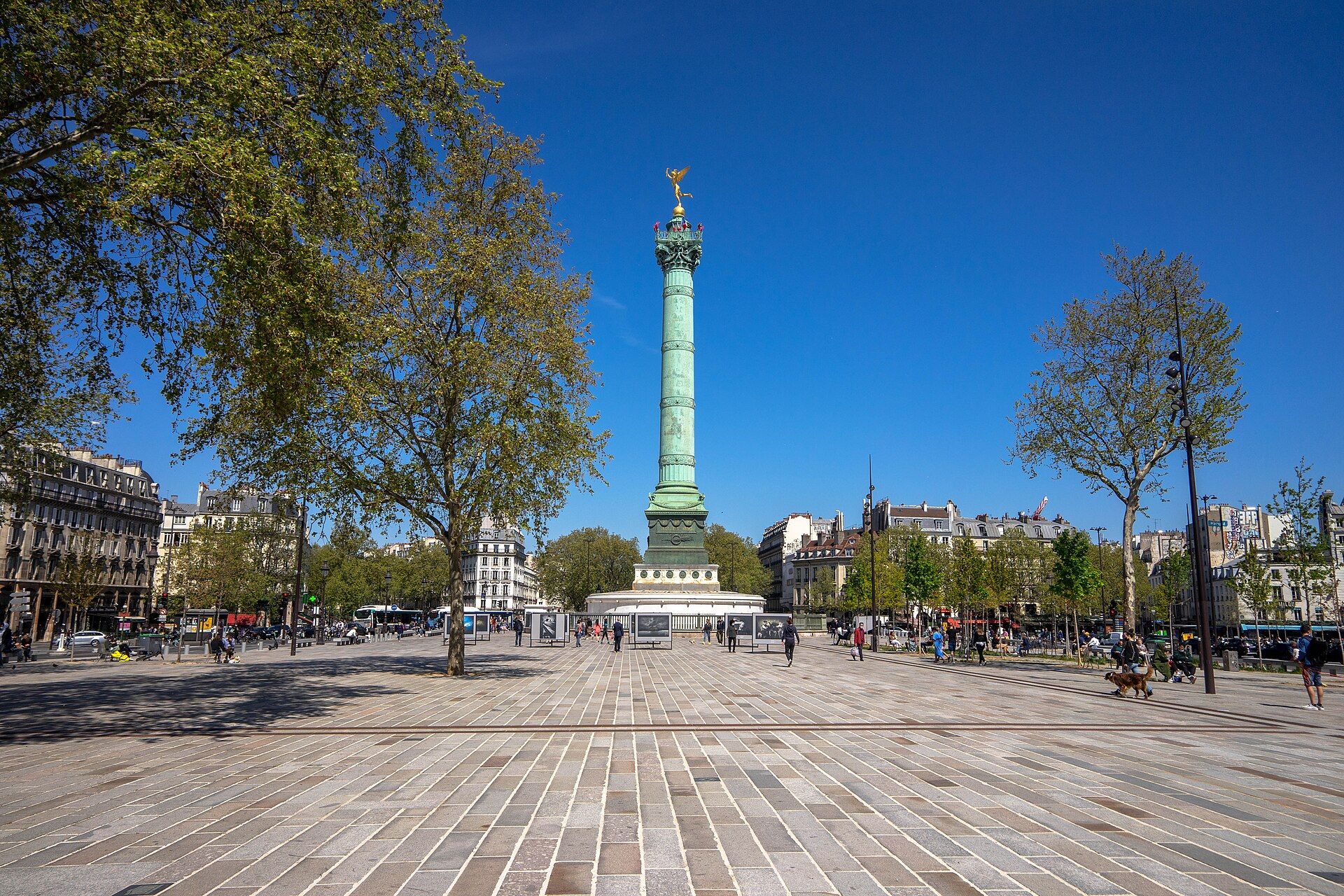
Rue de Lappe is described as very well known for its nightlife, the heart of the fashionable Bastille district; rue Oberkampf became a fashionable street in the 1990s, with cafés, restaurants, clubs and concert halls, mostly in its eastern half and in rue Saint-Maur and rue Jean-Pierre-Timbaud. The Opéra Bastille (2,745 seats), the Cirque d’Hiver, the Bataclan and the Atelier des Lumières add evening events. Line 1 from Bastille reaches the Louvre, the Concorde, the Champs-Élysées and La Défense without a change. The drawback is documented only in part: noise is possible near the bar streets, but no official data measures it. See hotels near Bastille and hotels in the 11th arrondissement.
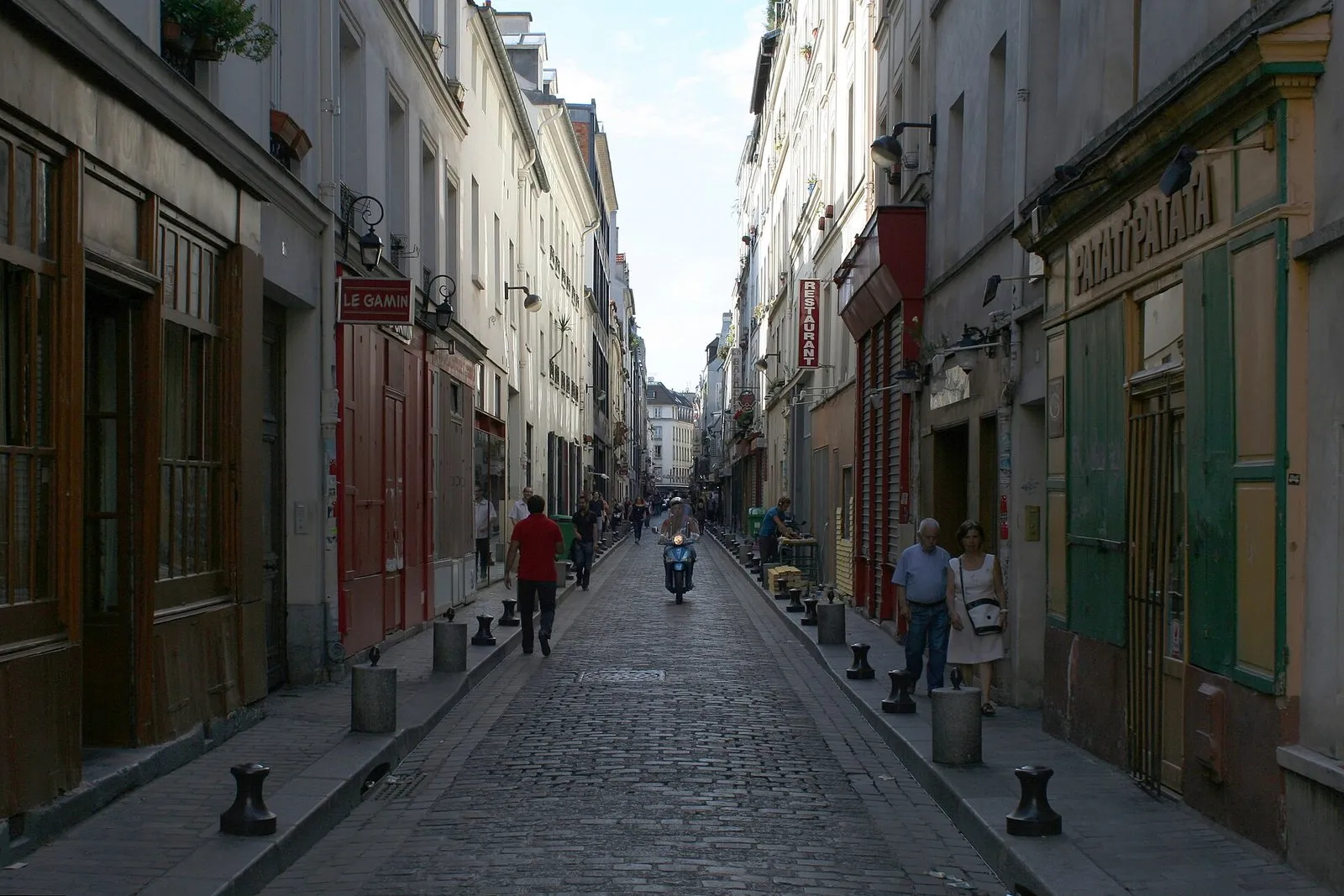
Photo: Coyau, CC BY-SA 3.0, via Wikimedia Commons
Pigalle and SoPi
The district keeps cabarets and venues: the Divan du Monde, the Moulin Rouge, La Cigale, La Boule Noire, Les Trois Baudets and Le Trianon, and bars along rue des Martyrs and rue Frochot. One source adds that the neon signs and cabarets are today, for many, a decor for tourists. Four metro lines serve the area (2, 7, 12 and 13), but no RER line does. Japan’s foreign ministry classes the Pigalle sector among high-crime zones, with touts and bars that overcharge; it gives no hour and no street. The UK Foreign Office warns of drinks being spiked in bars and advises buying your own drinks and keeping them in sight. For hotels see Pigalle hotels.
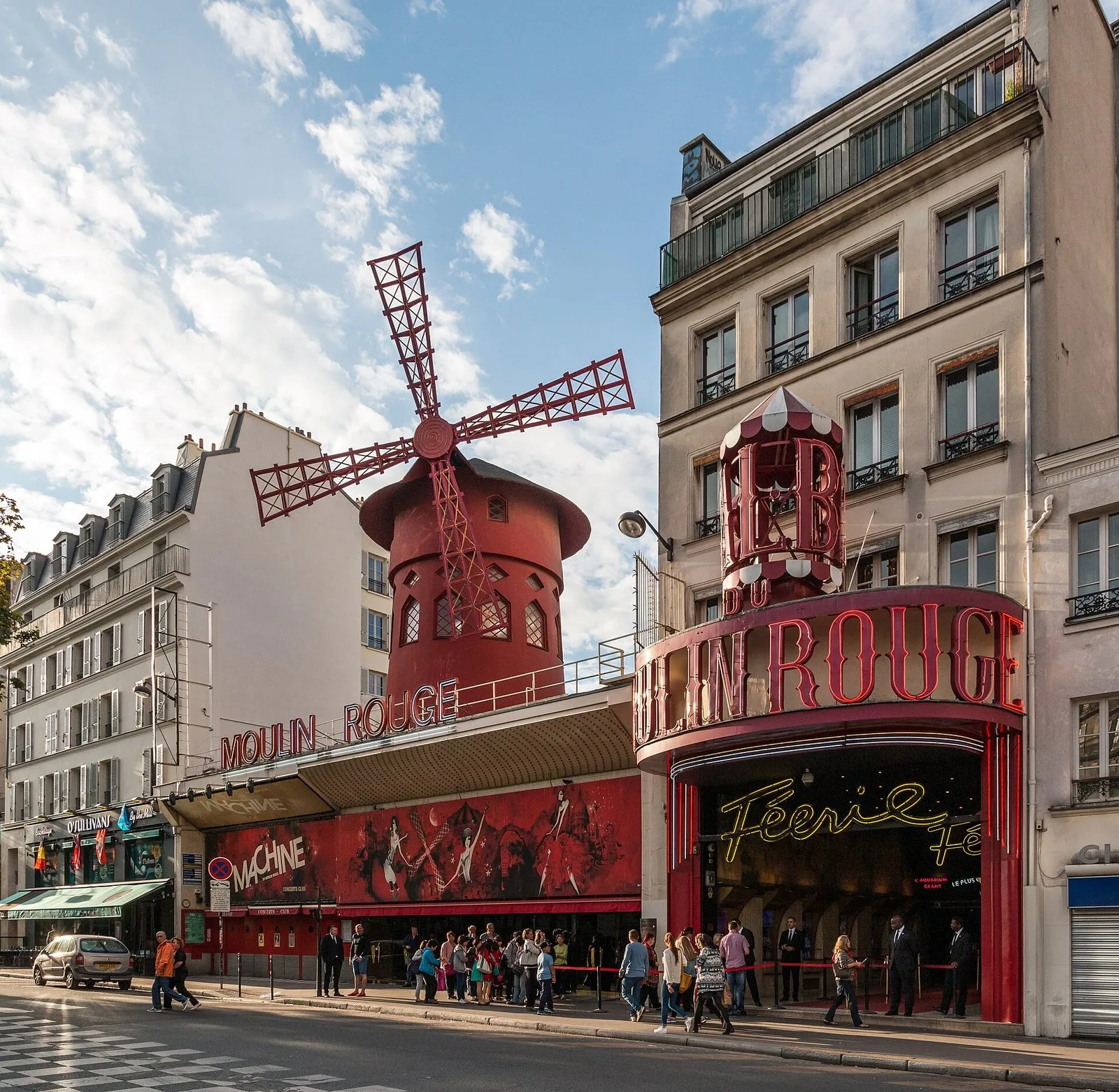
Photo: Dietmar Rabich, CC BY-SA 4.0, via Wikimedia Commons
The Marais, Montmartre and the canal
The Marais has LGBT+ bars and restaurants around rue Sainte-Croix-de-la-Bretonnerie and rue Vieille-du-Temple, and the Gaîté Lyrique; our neighbourhood sheet notes fewer clubs than at Oberkampf or Pigalle. Montmartre’s evening life sits at the foot of the hill, around Pigalle; the top of the hill is mostly tourists in the evening. For the Canal Saint-Martin, our source on nightlife is weak, so we do not describe it. See Montmartre hotels.
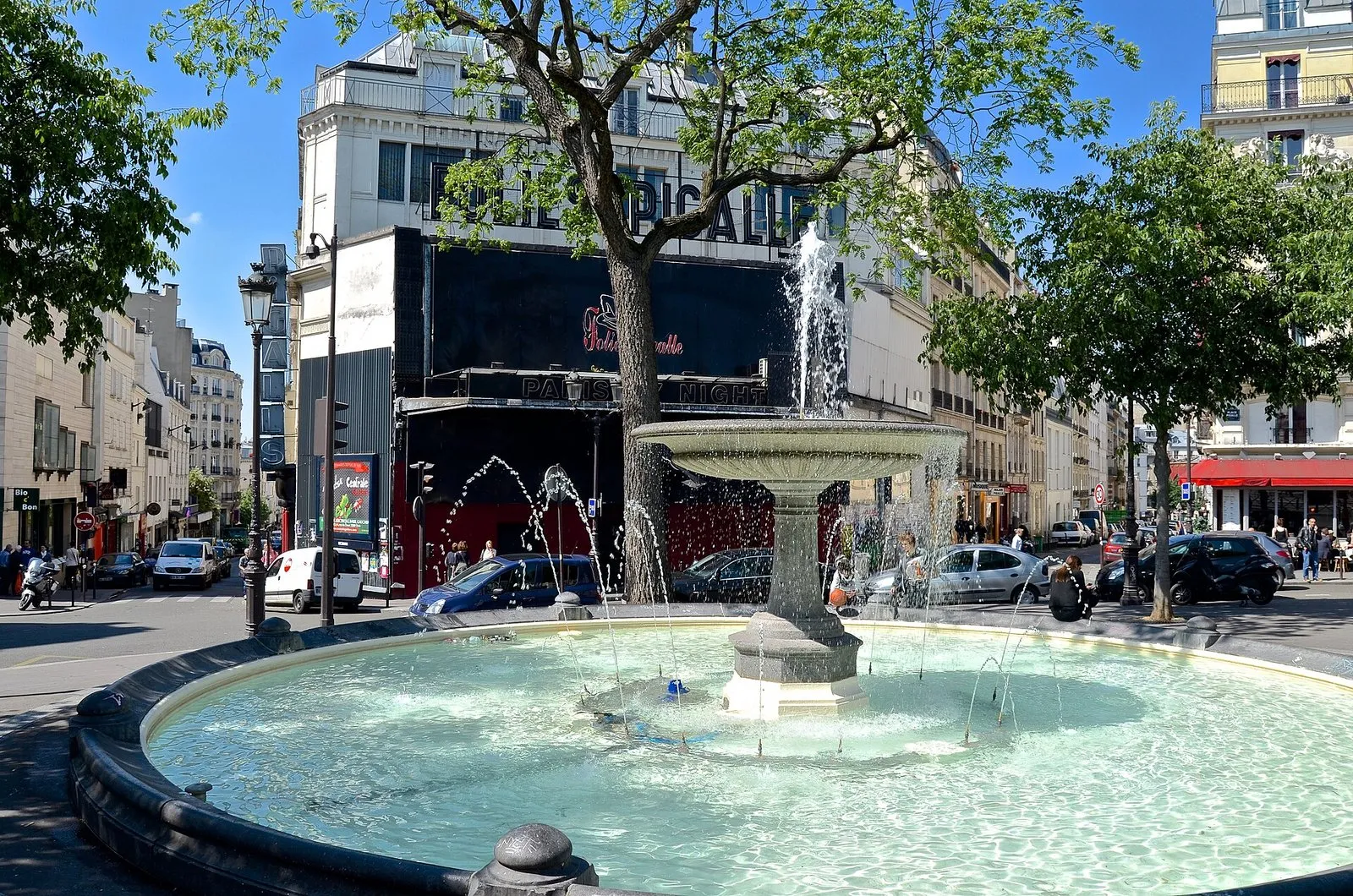
Photo: David McSpadden, CC BY 2.0, via Wikimedia Commons
Shows and late cafés
Around the Grands Boulevards, evenings revolve around the Palais Garnier, the Opéra-Comique, the Grand Rex and the music halls. On the Champs-Élysées, the Crazy Horse, the Lido and the Théâtre des Champs-Élysées are the venues our data names. In Saint-Germain, Les Deux Magots serves from 7.30 am to 1 am, but no source describes a late-night bar district there. The Louvre stays open until 9 pm on Wednesdays and Fridays. Rue Sainte-Anne, in the 1st and 2nd, has been the Japanese quarter since the 2000s.
The Latin Quarter and Montparnasse
Neither is a nightlife hub in our data, and both are rated possible. In the Latin Quarter the evening is rue de la Huchette, with nightly jazz at the Caveau and, at the theatre of the same street, La Cantatrice chauve and La Leçon, played without a break since 1957, then the cinemas and restaurants of the 5th. Montparnasse has La Coupole, a brasserie of 1927, and two theatres in rue de la Gaîté, both listed as historic monuments in 1984; one hotel there speaks of nightlife, but we read no independent source on bars. See the sections of the home page for the hotels of both areas.
How we chose
We kept the areas where our data documents evening life, and the hotels beside them whose files confirm a fact we can state, a pool, a history, a rooftop. We did not rank the areas. Closing times of bars are not in our data, so we give none, and no prices are published.
Which area for whom
- Bars and concerts until late. Bastille–Oberkampf, with a station 150 to 250 m on foot from each of the four hotels above.
- Cabaret, music halls and a hotel with a story. Pigalle–SoPi.
- Dinner and late cafés rather than bars. Saint-Germain, where Les Deux Magots serves until 1 am, or the Marais, with its restaurants and LGBT+ bars.
- Shows. Opéra, Grands Boulevards or Champs-Élysées, with the Garnier, the Grand Rex and the cabarets.
- Jazz and theatre. The Latin Quarter, in rue de la Huchette, or Montparnasse, in rue de la Gaîté.

.jpg)


